

BlueHart Impex

sea port

Girl wearing necklace

Rise of India’s Imitation Jewelry Export Industry

Rise of India’s Imitation Jewelry Export Industry, India’s imitation jewelry export industry is shining brighter than ever. With its exquisite designs, impeccable craftsmanship, and competitive pricing, Indian imitation jewelry has captured the hearts of fashion enthusiasts around the globe. This article explores the remarkable journey of India’s imitation jewelry export industry, tracing its sparkling rise to international prominence. India’s Rich Tradition of Jewelry Making India has a long and illustrious history of jewelry making, dating back thousands of years. From the opulent jewels jewelry has always held a special place in Indian culture and tradition. “Our rich heritage of jewelry making provides a solid foundation for the imitation jewelry export industry to thrive.” Impeccable Craftsmanship and Attention to Detail One of the hallmarks of India’s imitation jewelry export industry is its impeccable craftsmanship and attention to detail. Skilled artisans painstakingly recreate the look and feel of precious metals and gemstones using materials such as brass, copper, and cubic zirconia. “Each piece of imitation jewelry is a work of art,” explains Rajesh Gupta, a jewelry exporter based in Mumbai. “Our artisans bring centuries-old techniques and traditions to life, infusing every piece with a sense of heritage and authenticity.” Making Fashion Accessible to All One of the key drivers behind the rise of India’s imitation jewelry export industry is its affordability. Unlike fine jewelry, which can be prohibitively expensive, imitation jewelry offers fashion-conscious consumers the opportunity to accessorize with style without breaking the bank. Conclusion This article discusses the development of the imitation jewelry export industry. In India, proving that the country is talented, resourceful, and incredible in terms of craftsmanship and creativity. Gradually the Indian exporters and artisans boast of themselves in providing wide range. Style of garments keeping in mind the changing trends for the world to embrace the fashion industry. Packed with all kinds of imitation jewelry known for affordable luxury, timeless designs and global appeal, the Indian imitation jewellery export market looks to have better days ahead And all set on the path to become a leading player in the global fashion accessories market. click here for smooth impex operations

Rise of India’s Imitation Jewelry Export Industry Read More »
Procuring Change within the Import-Export

Ensuring Smooth Import-Export Operations

Ensuring Smooth Import-Export Operations The goal of this paper is to dwell upon the topic of achieving a high level of organization to be conducive to the smooth and efficient flow of goods and services across borders.  Why Customs Compliance Matters 1. Avoiding Penalties and Fines: To customs regulations is a grave offense likely to be subjected to legal consequences. They can actually accumulate over time in the case of a business and hurt the general profitability of the firm. 2. Preventing Delays: Lack of proper or sometimes inadequate documentation of these products normally leads to spent at the various check points that are available for customs. Such as supply of spare parts inventories and the delivery of the final product to customers. Non-compliance with customs laws can lead to severe penalties and fines for impex, and freight forwarders As well as duties for the re-exportation of goods to other countries. 1. Accurate Documentation: To optimize customs compliance documentation must be accureate and easy to be complete. Other necessary documents include the commercial invoices, bills of lading, certificate of origin, and packing lists. 2. Correct Tariff Classification: Products must be right HS code if one is to know the correct tariffs and duties that apply. Miss-classification can lead to over-payment of duties or actualization of penalties. Individuals, collectivities, and institutions must ensure that they take time to train themselves on how to classify their products more closely. Useful Advice on Meeting Customs Requriements 1. Invest in Training and Education: As it has been established, staff engaged in import-export operations must be trained. constant training must be conducted to the staff who are involved in import-export operations. 2. Utilize Technology and Automation: This is because through advance preparation, proper consultation and strategic Use of technology, many processes related to customs compliance can significantly more efficient. Conclusion Customs compliance is one of the essential elements that determine the prosperity of import-export undertakings. Therefore, by following customs regulations, the business enterprise can reduce on various penalties that may arise, And minimize on the time it takes for the consignment, and develop a reputation for being reliable. click here to see ecom boom in impex

Ensuring Smooth Import-Export Operations Read More »

Global Consumption and Redefining Import-Export

Impact of Digitalization on Import-Export Processes

Impact of Digitalization on Import-Export Processes, thus, playing a key role in the interaction of economies, digitalization is rapidly changing the landscape of international business. The global trading system is entered into a new phase that is come as the digital revolution era. Digitalisation can be inferred to mean the incorporation of digital solutions to peoples’ daily activities within the business environment. These technologies are only helpful in optimizing processes; they are also transforming the very nature of global commerce. The effects of digitization on import and export activities as follows: Attractiveness of Digitalization for Business Cost Reduction: In effect, digitalization cuts down on general expenses through the elimination of repetitive work, paper work, and slow effectiveness. Pricing is directly related to profitability and therefore a lower cost means improved profit margin as well as better positioning to offer lower prices. Speed and Efficiency: The various trade forms and customs procedures are facilitated by the automated systems in the processing of documents. Shorter processing time means shorter delivery times, therefore improving customer satisfaction levels and brand loyalty. Enhanced Customer Experience: Real-time tracking and shorter delivery time all enhance the number one priority, the customer experience. Entrepreneurs can give the latest information to customers, gain customers’ trust, and create loyalty. Scalability and Flexibility: Some of the factors include the following; Since the business operates through the use of digital platforms. It is easy to expand the business and reach other markets and levels without incurring much cost on infrastructure. Market changes and customer requirements are more important, which provides flexibility in adapting to them as one of the competitive advantages. Conclusion It has been seen that through the use of digital tools, there are fewer errors that are made in documentation and completing compliance checks. Records increase compliance with the international trading laws so that there can be little chance of facing penalties and legal problems. click here to see roles and region trade in impex

Impact of Digitalization on Import-Export Processes Read More »

supply chains solutions for import export business

Impact on trading rules and trends around the world

Impact on trading rules and trends around the world are best determined by trends policies around the world and these include factors such as access, charges like tariffs, norms, and conditions. On how imports conduct their business both locally and internationally. As nationsstruggle to reset, loosen or deepen their relations through the trade relations their interaction in the international trade continues to change. Heralding the current trade developments, the article reviews and analyses the recent trade agreements, providing an insight on current trends and challenges of imports and exports globally. Observed in the development and emergence of regional trade Over the last few years, the creation of regional trade blocs has become more popular. As the level of economic integration increases and the desire of countries to enhance cooperation within the regions grows as well. Large scale trading agreements such as the CPTPP and the AfCFTA are changing the firm structure And the destination of investment hence changing the consumer and business directions. Thus, regional trade blocs provide a mechanism of progressing towards enhanced economic integration and open markets: “Regional trade partners present a clear vision of achieving greater trade liberalization and market access,” notes Sarah Lee, an international trade economist. They hence make possible the potential for growth and hope to prosperity. Due to aspects such as lower tariffs, compatible rules, and ease in investment across borders as encompassed in the agreements. Effects on Supply Chains and Matters of Logistics Trade agreements do affect supply chains and logistics in a way that can affect the methods of product acquisition, pathways of transportation, and the management of inventories and stocks. Tariff fluctuations, shifts in customs processes and regulations as well as restrictions. Which govern the importation of goods in a country, interfere directly with the supply chain And create steep operating expenses for the companies in the international business sector. Speaking of trade agreements, these bring new opportunities and potentially. New issues to consolidate logistics and supply chain management, according to Anna Chang, logistics professional. ”On one hand, decreased tariffs and liberalization of customs requirements can bring beneficial effects such as cost reduction and more efficiency. Inversely, legal unpredictability and geopolitical instabilities may lead to fluctuating costs and placements. ” Digital Trade and E-commerce Consequently, SI is increasingly being incorporated in regional and bilateral trade agreements with elements pertinent to digital trade and e-commerce. DEPA and WTO e-commerce negotiations, in particular, are actively seeking to set the rules And regulatory frameworks for cross border digital operations and transactions, data protection and ownership of intangible contents. Technological advancement, particularly in trade and e-commerce, continue to transform the global economy and present new prospects for expanding its market chain, according to technology policy analyst David Brown. It is added that any trade agreements signed among member countries that touch upon digital trade issues can facilitate enhancement of the full potential of the digital economy and promote further growth. Conclusion Present trade policies that are being developed and implemented are therefore redesigning the flows of imports and exports. All countries, as well as access to markets and supply chain and other policies and procedures. Whether it’s through OECD or WTO negotiations or through bilateral or pluri-lateral negotiations These agreements are leading to the process of economic globalization, encouraging competition, investing in innovation and creating new opportunities for consumers and firms. As countries intensify talks and sign on trade agreements/settings, companies need to be informed about changes and aspects in trade relations. This paper discusses how parties can make the best out of the existing possibilities and opportunities in the course of the existing and new trade agreements, as well as how they can manage the existing risks And threats in the world of international trade and thus create the foundation for their success. click here to see Redifining Impex

Impact on trading rules and trends around the world Read More »

Global Consumption and Redefining Import-Export

The pandemic has affected the Global Consumption and Redefining Import-Export even a consumer consumption, and supply chains. Among the primary tasks emerging as the economy recuperates, companies are challenged by the need to define their further development vectors and strategies. In our current world trying to build a trading strategy in a post-COVID19 world, we provide and analyse important factors and potential import-export opportunities. Managing supply chain disruptions From the COVID-19 outbreak, import & export companies realized the lack of multiple suppliers , and depending only on a single source Or one dominant supplier and implementing just-in-time inventory enabled the virus to lead to a number of disruptions. Today’s customers are pursuing strategies for managing complex supply chains during the post-pandemic environment. which include broadening their supplier lists, hardening supply networks, and leveraging information technology as the supply chain visibility tool. Accelerating Digital Transformation COVID19 has hastened the culture of sector transformation in connection with the use of digital tools. Concerning import-export companies, including the shift to remote working, online meetings, and transaction. In Covid 19, companies are making great efforts to go for digital methods to ease their upcoming work. ”These strategies include e-commerce platforms and the use of digital marketing and data services which will help business operators to harness new growth opportunities since the shift in consumer behavior is unstoppable. ” Strengthening Partnerships and Collaboration COVID-19 predominantly strengthens the position of collaboration and potentials of the partnerships. There are many strategic partnerships that import and export companies are formulating with suppliers, distributors And other players to benefit from shared returns to business. Conclusion Import-export firms are not exceptions to what the post- pandemic post- virus is likely to present and offer to businesses. Supply chain resilience, digital advancements, sustainability, growing demand for new markets. And improved business partnerships are areas that will help businesses to manage risks and achieve growth even in the Post-Pandemic period. As import-export businesses continue to evolve in response to changing market dynamics, one thing remains clear: It has been necessity to continue embracing resilience, adaptability, and innovation in the new pre-2021 scenario. Therefore, accepting change and accepting opportunities means that even during times of uncertainty in the business world, businesses can step up efforts towards recovery and design the world’s trading future. click here for impex solution

Global Consumption and Redefining Import-Export Read More »

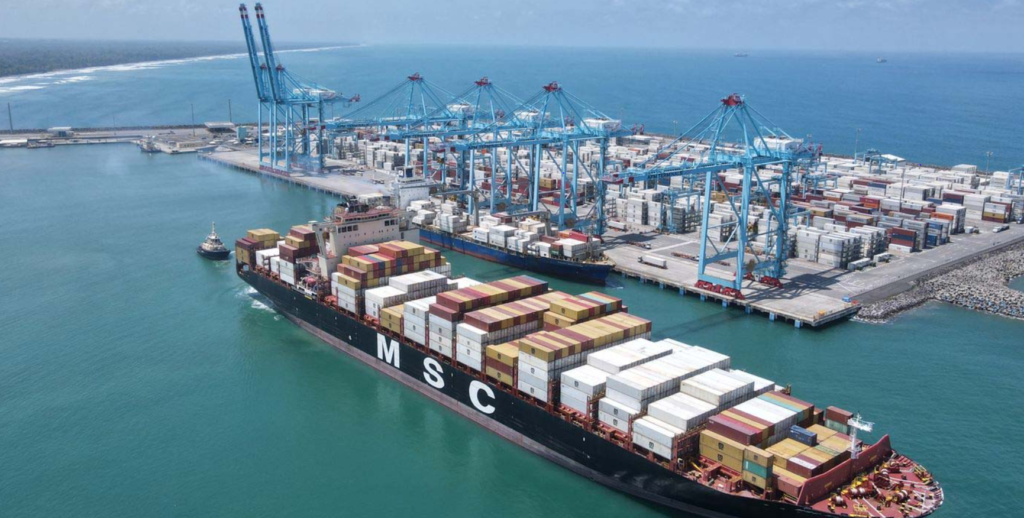
sea Port of india Import Export Business risk trade tariffs

Import Export Business risk trade tariffs

In the import-export business new virulent instruments such as tariffs and trade wars, which themselves have created substantial trade volatility tariffs and unpredictability risk in Import-Export Business deals with risk factors affecting firms at all scales. As countries continue to decimate each other with trade and tariffs and productive retaliative actions. This article aims to give an insight of the effects of tariffs and trade-war on the import-export business and how one can manage the risks which are inherent in conditions that are constantly changing.  The Effects of Tariff Systems on Import and Export Businesses Tariffs, or taxes placed upon imported items that are allowed to enter the country, can affect import-export companies immensely. Higher tariffs mean high prices for imported goods that cannot compete easily with domestic products And put them in risk, therefore, leads to a decrease in demand. On the other hand, lower tariffs might expand market access for businesses And open opportunities to penetrate different markets for their products. Trade tensions and what was propaganda for retaliatory tariffs earlier is gradually becoming reality in the global economy Another issue that brings moderate unpredictability in the import-export activity is the trade wars – tariff Increases and corresponding sanctions between countries. As one country continues imposing tariffs on goods produced by fellow countries in what it considers unfair trade practices Other traders could end up suffering losses with business having to deal with higher costs and jammed up supply chains. Hopeful entrepreneurs fail to realize that trade wars are not isolated events, but they generate a domino effect across industries. According to Sarah Lee, an economist who focuses on international trade. As tariffs continue to be imposed and counter tariffs are put in place. Businesses may be forced to pay more for their imports. Source their inputs from other markets that may be more expensive or lose market access entirely. Navigating Uncertainty Trading is central to most businesses and more so import-export businesses where goods are bought in large quantities One country then sold them to another country where they are produced in large quantities. Although tariffs and trade wars represent threats to import-export companies. it is still possible to transition through the definite uncertainty in different ways. Some of the measures that can be taken to remain relevant. Despite the uncertainties include: searching for other markets where to source their supplies and get information on current trade trends. Embracing Agility and Adaptability Winding the clock back to the recent past, import-export organizations can only adjust and develop a winning strategy that will enable them to survive in a constantly shifting environment. This paper concludes that flexibility can help import-export organizations to track market trends and respond to changes to guarantee their success in the market environment. Conclusion Tariffs and trade wars complicate the scenario that exist in the import-export business environment where organizations of all sizes stand to be challenged. Alternatively, through employing various strategies to promoting and maintaining business resiliency, pushing for policy stability And embracing adaptability and change, import-export businesses can effectively manage risks of instability and succeed under volatile, uncertain, complex and ambiguous environments typical for the contemporary global economy. click here for agri export blog

Import Export Business risk trade tariffs Read More »